Skip to content
Fort Worth Cold Care
Fort Worth commercial refrigeration

Refrigerated Display Case Repair in Fort Worth

Diagnosis for open-air merchandisers, deli cases, beverage coolers, and refrigerated retail displays.

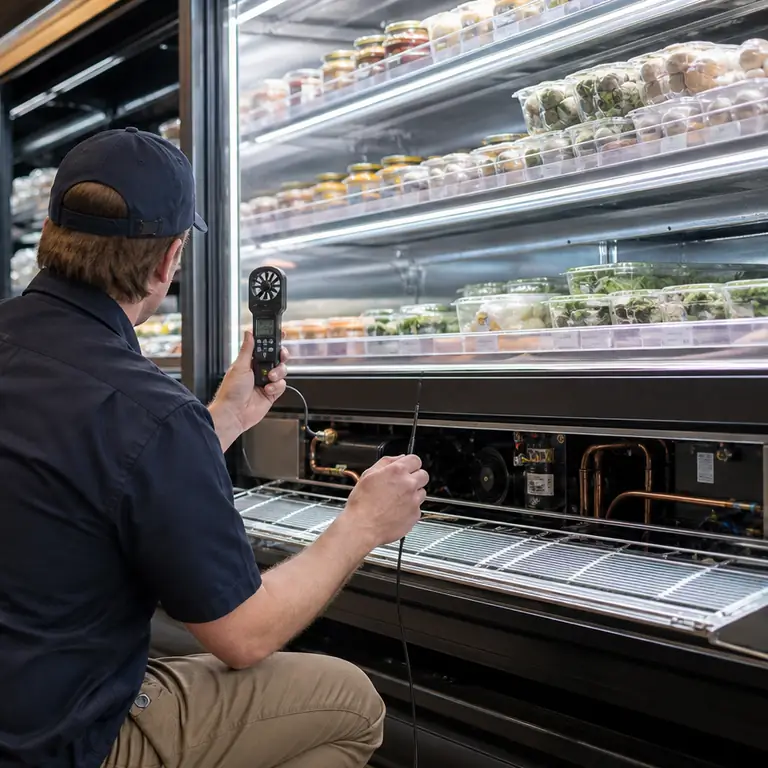
Technician measuring airflow at a refrigerated display case in Fort Worth
Commercial equipmentTemperature-first intakeWritten scope questionsService-area matching

Fort Worth Cold Care helps commercial operators request refrigerated display-case repair for open-air merchandisers, deli cases, beverage coolers, and other retail equipment affected by airflow, defrost, condensate, controls, loading, or refrigeration faults.

Last updated: August 26, 2026

What happens on the first visit

The first visit should record product and discharge-air temperatures, loading and curtain use, return-air obstructions, fan operation, frost pattern, defrost and condensate conditions, condenser or rack context, controls, and circuit performance where required.

The air curtain is part of the case

Open-air cases depend on an uninterrupted discharge and return-air path. Product beyond load lines, blocked grilles, damaged honeycombs, drafts, or missing night curtains can upset performance.

Condensate symptoms can reveal defrost problems

Water on the floor may involve drains, pans, heaters, defrost timing, case leveling, or air infiltration. The source should be documented instead of treating only the puddle.

Case temperature is not one single reading

Discharge air, return air, cabinet probes, and product temperatures serve different purposes. A diagnosis should identify what was measured and how it relates to food-safety decisions.

Understanding service charges and estimates

Ask for the call or diagnostic fee, included time, labor structure, service radius, and after-hours policy before dispatch. Published DFW examples retrieved August 26, 2026 include a $59 commercial ice-machine service call with $110 hourly labor, a $194.68 refrigeration call including one diagnostic hour, and a $254.25 emergency after-hours call. Those are other providers’ published entry charges—not quotes for this site or your equipment.

What the service scope can include

  • Case and circuit identification
  • Product and air-temperature readings
  • Load-line and airflow inspection
  • Fan and honeycomb checks
  • Frost, defrost, and drain assessment
  • Control and sensor testing
  • Condenser or rack coordination
  • Documented repair scope
Compare the decision

Shortcuts versus documented diagnosis

DecisionStaff-only checkRisky shortcutDocumented diagnosis
TemperatureRecord time and readingsKeep resetting equipmentPreserve evidence and test the cause
RefrigerantDo not handleTop off without a leak decisionQualified leak, recovery, and charge procedure
EstimateAsk for entry chargesAccept an undefined verbal totalSeparate call, labor, parts, refrigerant, and follow-up
Four documented steps

From report to verification

01

Triage temperature, product risk, and the operating condition

02

Assess equipment and preserve diagnostic evidence

03

Review and authorize the repair scope

04

Verify operation and retain the service record

Clear answers

Refrigerated Display Case Repair questions

Why is an open-air case warm at the front?

Blocked or disturbed air curtains, loading, fans, honeycombs, drafts, defrost, and refrigeration performance can create uneven temperatures.

Can product be stacked above the load line?

Doing so can disrupt designed airflow. Follow the case manufacturer’s loading limits.

Why is water collecting around the case?

Drain restrictions, pans, heaters, defrost, leveling, infiltration, and ambient humidity may contribute.

Does a night curtain reduce load?

When the case is designed for one and it is used correctly, a night curtain can reduce infiltration during closed hours.

What temperature should staff record?

Follow the operation’s food-safety plan and equipment guidance; product temperature and time history are more important than relying on one display value.

Refrigerated Display Case Repair: start with the equipment facts

Send the equipment type, current temperature, business ZIP code, alarm or symptom, and when the problem began.

Call (682) 255-1596 — Commercial refrigeration help