
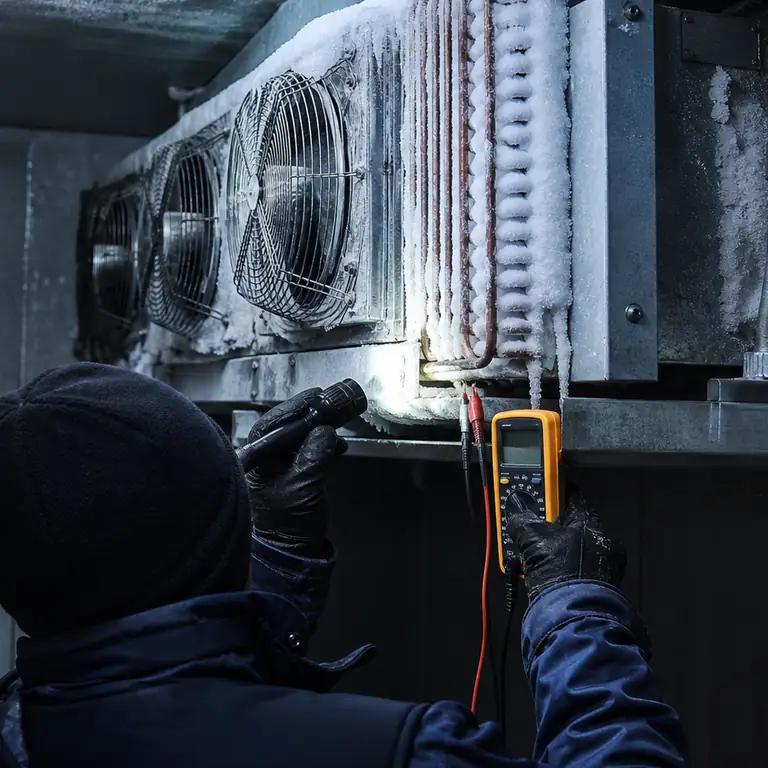
Fort Worth Cold Care connects commercial operators with walk-in cooler repair resources for temperature rise, iced coils, airflow problems, door infiltration, controls, drains, and refrigeration-circuit faults. If food temperature is involved, protect the product and record the timeline before troubleshooting the machine.
Last updated: August 26, 2026
What happens on the first visit
A useful first visit begins with the box, not a guessed replacement part. The technician should confirm product and air temperature, setpoint, recent loading, door traffic, alarm history, and whether the symptom changes between overnight and peak service. Testing can then follow the evidence through the door, evaporator, condenser, controls, electrical system, and refrigeration circuit.
Above 41°F is a product decision as well as a repair call
Texas food-establishment guidance commonly uses 41°F or below for cold holding. Record temperatures and times, keep the door closed, avoid loading warm product, and follow the operation’s approved contingency procedure. The person in charge must decide product disposition from current rules and the actual time-temperature history.
Why a cooler can recover overnight and fail during lunch
Door traffic, warm product, kitchen heat, weak evaporator airflow, dirty condenser surfaces, poor heat rejection, controls, charge conditions, or undersized equipment can combine at peak load. Fort Worth’s July and August normal highs are approximately 96°F, so a marginal system often reveals itself during the hottest operating window.
Ice is a symptom, not the diagnosis
Heavy icing may follow a defrost failure, failed fan, obstructed airflow, damaged gasket, open door, drain problem, control issue, or refrigeration condition. Controlled thawing may be necessary for testing, but thawing alone does not correct the cause. Staff should not chip the evaporator or apply uncontrolled heat.
Understanding service charges and estimates
Ask for the call or diagnostic fee, included time, labor structure, service radius, and after-hours policy before dispatch. Published DFW examples retrieved August 26, 2026 include a $59 commercial ice-machine service call with $110 hourly labor, a $194.68 refrigeration call including one diagnostic hour, and a $254.25 emergency after-hours call. Those are other providers’ published entry charges—not quotes for this site or your equipment.
What the service scope can include
- Record box, product, ambient, and setpoint conditions
- Inspect door closure, hinges, sweep, gasket, and infiltration
- Evaluate evaporator fan operation and airflow
- Inspect frost pattern, defrost sequence, drain, and condensate
- Check condenser condition, fans, airflow, and clearances
- Test relevant electrical components, sensors, controls, and safeties
- Evaluate refrigeration-circuit performance when required
- Document findings, proposed work, and follow-up