
The box is above 41°F
Record the temperature and time, limit openings, follow the person-in-charge procedure, and arrange diagnosis.
When a cooler runs warm, a freezer ices over, or an ice machine slows down, the cost is measured in product, downtime, and disrupted service.
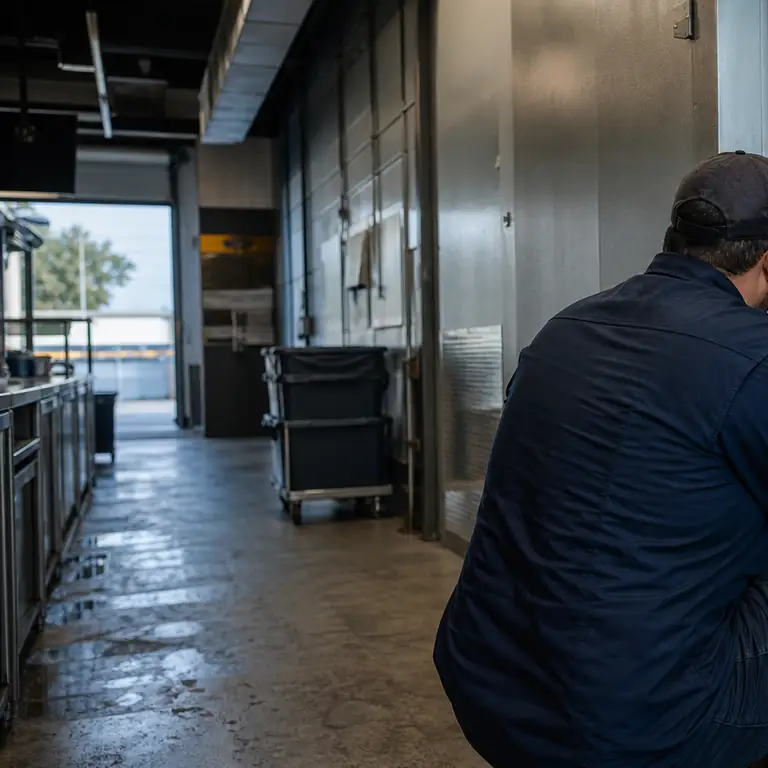
Fort Worth Cold Care connects commercial operators with refrigeration service requests for diagnosis, repair, maintenance, and planned equipment work across Fort Worth and selected Tarrant County communities.
Recognize the operating riskRecord the temperature and time, limit openings, follow the person-in-charge procedure, and arrange diagnosis.
Defrost, airflow, door seals, controls, drainage, and refrigeration conditions can all contribute.
Controls, pressure conditions, airflow, electrical components, or compressor stress may be involved.
Scale, water flow, filters, ventilation, condensers, controls, or refrigeration capacity can reduce harvest.
Requests are organized around equipment and failure mode so a responding contractor receives useful information before dispatch.
Diagnosis for warm boxes, iced evaporators, failed fans, door infiltration, controls, drains, and refrigeration-circuit faults.
Explore service →Priority serviceCommercial freezer diagnosis for temperature rise, icing, defrost, fan, heater, control, door, and condensing-unit problems.
Explore service →Priority serviceCommercial ice-machine diagnosis for slow production, freeze-up, incomplete harvest, scale, water, and refrigeration faults.
Explore service →Priority serviceRepair coordination for commercial reach-ins, prep tables, undercounter refrigerators, and reach-in freezers.
Explore service →Commercial scopeDiagnosis for open-air merchandisers, deli cases, beverage coolers, and refrigerated retail displays.
Explore service →Commercial scopePlanning for walk-ins, matched refrigeration systems, controls, drainage, commissioning, and commercial equipment placement.
Explore service →Priority servicePreventive maintenance for coils, fans, drains, doors, controls, temperatures, electrical connections, and service records.
Explore service →Commercial scopeCommercial leak detection, repair planning, recovery, evacuation, charging, and documentation by qualified personnel.
Explore service →Commercial scopeEvidence-based compressor diagnosis, electrical checks, system-cause review, replacement planning, and commissioning.
Explore service →Commercial scopeCommercial refrigeration coordination for walk-ins, prep tables, reach-ins, bar coolers, ice machines, and restaurant service deadlines.
Explore service →Commercial scopeService coordination for warehouse coolers, freezers, distribution facilities, and higher-capacity commercial refrigeration systems.
Explore service →Commercial scopeRepair-versus-replacement planning for aging, mismatched, obsolete, or repeatedly failing commercial refrigeration systems.
Explore service →Urgent triageUrgent commercial refrigeration triage for warming boxes, stopped equipment, product exposure, alarms, leaks, and operational shutdowns.
Explore service →Model information, box temperature, alarm history, and failure timeline help the provider prepare.
Product exposure and operating risk matter more than how dramatic a symptom looks.
Separate the call fee from labor, parts, refrigerant, recovery, and after-hours charges.
The site serves commercial operators, not household refrigerators.
Describe the failure and product condition
Confirm service scope and entry charges
Diagnose before replacing parts
Record the outcome and follow-up
Protect the product before the repair begins
If cold-held food is warming, minimize door openings, record temperatures and times, and follow the operation’s approved food-safety procedure.
There is no honest flat price for an undiagnosed refrigeration failure. Published DFW examples retrieved August 26, 2026 include a $59 commercial ice-machine service call with $110 hourly labor, a $194.68 refrigeration call including one diagnostic hour, and a $254.25 emergency after-hours call. These are other providers’ market examples—not Fort Worth Cold Care quotes.
| Need | What can be stated first | What changes the total |
|---|---|---|
| Walk-in cooler or freezer | Call fee and labor structure | Defrost versus sealed-system work, refrigerant, motors, controls, access |
| Ice machine | Published example: $59 call + $110/hour | Scale, water components, harvest controls, refrigeration work |
| After-hours response | Published example: $254.25 entry call | Time, zone, minimum, parts, and follow-up |
Commercial refrigeration coordination for Arlington restaurants, hotels, entertainment venues, retailers, and institutional kitchens.
Commercial refrigeration support for Grapevine hotels, convention facilities, restaurants, tourism venues, and retail food operations.
Commercial refrigeration resources for Mansfield restaurants, mixed-use developments, sports venues, retail, and institutional kitchens.
Commercial refrigeration service coordination for North Richland Hills restaurants, retail centers, entertainment properties, and institutional facilities.
Commercial refrigeration resources for Southlake restaurants, specialty grocery, culinary businesses, hospitality, and retail food operations.
Share equipment type, current and target temperature, alarm, timeline, product exposure, business ZIP, access, and operational deadline.
Start with the equipment and ZIP code. Contact details come second.
Fort Worth Cold Care will review the details and route the enquiry to an appropriate local service provider. Provider coverage and timing are not guaranteed until confirmed.
Record the temperature and time, limit door openings, follow the operation’s food-safety procedure, and seek qualified diagnosis. Apply current rules to the actual time-temperature history.
No. Fort Worth Cold Care is scoped to commercial equipment used by food service, hospitality, grocery, retail, institutions, and cold-chain operations.
Usually not responsibly. A provider can state the service-call fee, included diagnostic time, labor structure, travel zone, and after-hours policy before diagnosis.
Low charge is a condition, not a complete diagnosis. Leak detection, repair requirements, recovery, and charging belong with properly qualified personnel.
Door openings, warm loading, kitchen heat, dirty condensers, poor airflow, infiltration, controls, charge conditions, or undersized equipment can combine at peak load.
The interval depends on condenser environment, equipment, door traffic, grease, dust, and criticality. The documented scope matters as much as the calendar.
Describe the equipment. Protect the inventory. Get the right help.
Send the equipment type, current temperature, business ZIP code, alarm or symptom, and when the problem began.