
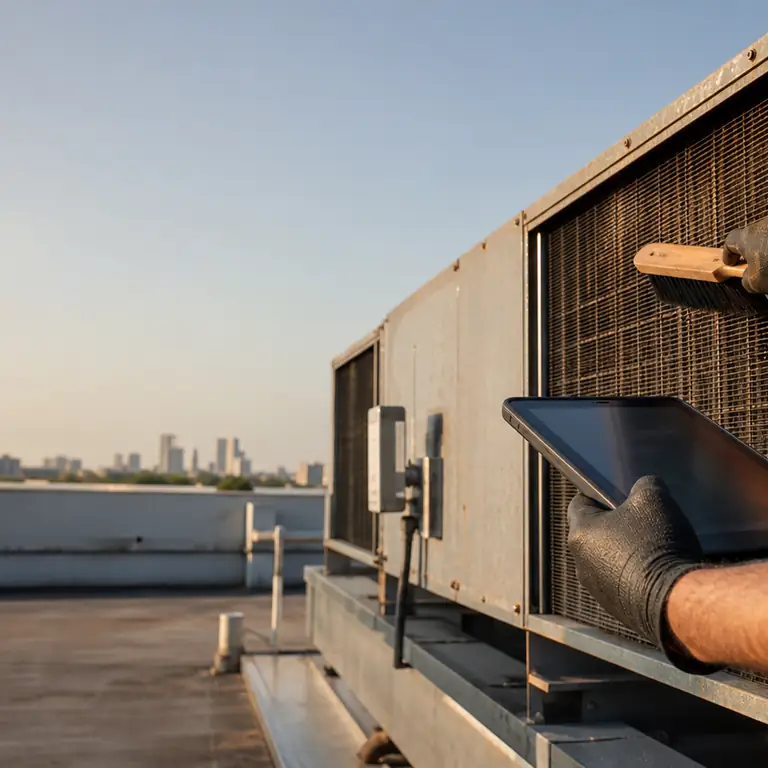
Fort Worth Cold Care connects operators with commercial refrigeration maintenance scopes built around actual equipment, environment, usage, and criticality. A checklist has value only when readings, conditions, and corrective actions are documented.
Last updated: August 26, 2026
What happens on the first visit
The first maintenance visit should inventory equipment, record operating conditions, inspect heat-transfer surfaces, fans, drains, doors, electrical connections, controls, temperatures, and visible refrigerant-circuit concerns, then separate immediate defects from planned work.
The interval should follow the environment
Restaurant grease, flour, roof dust, cottonwood, heavy door traffic, and high ambient load can justify shorter intervals. A clean low-load installation may use a different schedule. Quarterly versus twice-yearly is a scope decision, not a slogan.
Condenser cleanliness protects heat rejection
A loaded condenser raises temperature and pressure stress and can reduce capacity. Cleaning method must suit the coil and contamination; crushed fins or forced debris deeper into the coil are not maintenance improvements.
Records turn maintenance into an operating system
Temperature trends, amperage or control findings, cleaned components, door defects, refrigerant observations, and deferred work help operators spot repeat conditions and support food-safety documentation.
Understanding service charges and estimates
Ask for the call or diagnostic fee, included time, labor structure, service radius, and after-hours policy before dispatch. Published DFW examples retrieved August 26, 2026 include a $59 commercial ice-machine service call with $110 hourly labor, a $194.68 refrigeration call including one diagnostic hour, and a $254.25 emergency after-hours call. Those are other providers’ published entry charges—not quotes for this site or your equipment.
What the service scope can include
- Equipment inventory and condition record
- Condenser and evaporator inspection
- Fan and airflow checks
- Drain and condensate review
- Door, gasket, hinge, and closer inspection
- Control, sensor, and electrical observations
- Temperature and operating-condition record
- Prioritized corrective-action list

