Skip to content
Fort Worth Cold Care
Fort Worth commercial refrigeration

Commercial Refrigerant Leak Repair in Fort Worth

Commercial leak detection, repair planning, recovery, evacuation, charging, and documentation by qualified personnel.

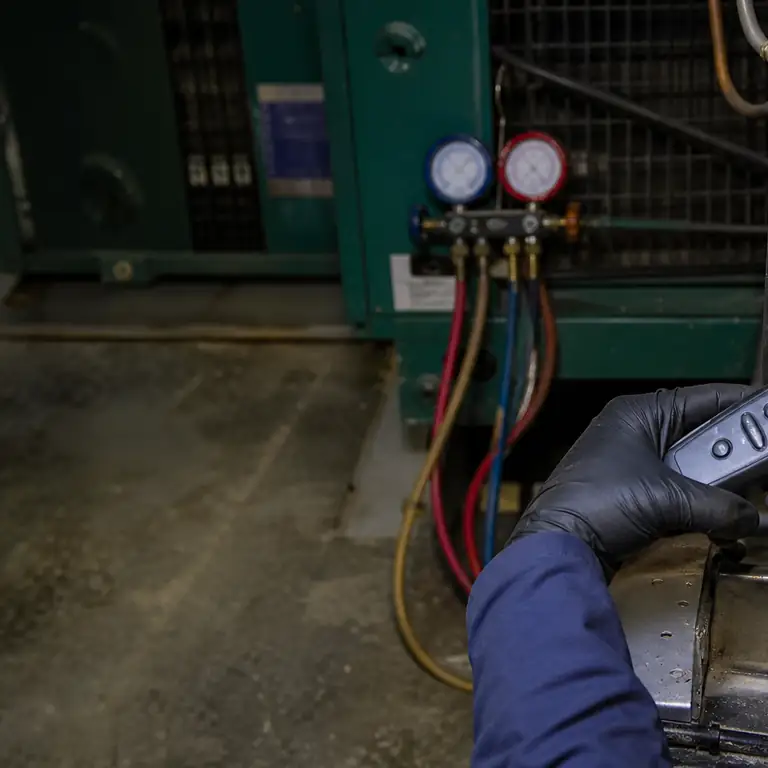
Technician performing electronic leak detection on commercial refrigeration piping in Fort Worth
Commercial equipmentTemperature-first intakeWritten scope questionsService-area matching

Fort Worth Cold Care helps commercial operators request refrigerant leak diagnosis rather than repeated topping-off. Low charge is a condition; the source, repair, recovery, evacuation, charging, and documentation depend on the equipment and applicable rules.

Last updated: August 26, 2026

What happens on the first visit

The technician should identify refrigerant and equipment, review prior charging and repair history, inspect likely leak points, evaluate operating evidence, use suitable detection methods, and explain whether additional access, isolation, recovery, or follow-up testing is required.

Oil and frost are clues, not final proof

Oil residue, unusual frost, bubbles at an accessible joint, repeated low-charge symptoms, and performance changes can guide a search. Detection method and access should match the suspected location.

A recharge without a leak decision is incomplete

Adding refrigerant can restore operation temporarily while allowing the underlying loss to continue. The estimate should separate detection, repair, recovery, evacuation, refrigerant, and verification.

Refrigerant work belongs with qualified personnel

EPA Section 608 rules govern refrigerant handling and recovery. Equipment size, refrigerant type, leak rate, repair requirements, and current regulations affect the proper procedure.

Understanding service charges and estimates

Ask for the call or diagnostic fee, included time, labor structure, service radius, and after-hours policy before dispatch. Published DFW examples retrieved August 26, 2026 include a $59 commercial ice-machine service call with $110 hourly labor, a $194.68 refrigeration call including one diagnostic hour, and a $254.25 emergency after-hours call. Those are other providers’ published entry charges—not quotes for this site or your equipment.

What the service scope can include

  • Equipment and refrigerant identification
  • Service and charging-history review
  • Visual and electronic leak search as appropriate
  • Access and isolation planning
  • Repair-scope documentation
  • Recovery and evacuation scope
  • Charging and performance verification
  • Follow-up or monitoring recommendation
Compare the decision

Shortcuts versus documented diagnosis

DecisionStaff-only checkRisky shortcutDocumented diagnosis
TemperatureRecord time and readingsKeep resetting equipmentPreserve evidence and test the cause
RefrigerantDo not handleTop off without a leak decisionQualified leak, recovery, and charge procedure
EstimateAsk for entry chargesAccept an undefined verbal totalSeparate call, labor, parts, refrigerant, and follow-up
Four documented steps

From report to verification

01

Triage temperature, product risk, and the operating condition

02

Assess equipment and preserve diagnostic evidence

03

Review and authorize the repair scope

04

Verify operation and retain the service record

Clear answers

Commercial Refrigerant Leak Repair questions

Does low refrigerant always mean a leak?

A sealed system should not consume refrigerant, but testing must confirm the condition and rule out misdiagnosis or prior service issues.

Can refrigerant simply be added?

The leak condition, equipment, refrigerant, applicable requirements, and repair plan should be addressed first.

What are common leak clues?

Oil residue, repeated low-charge performance, unusual frost, bubbles at accessible joints, and prior recharge history are clues, not standalone proof.

Who may handle refrigerant?

Refrigerant handling and recovery should be performed by appropriately certified personnel under applicable EPA requirements.

When should a leaking system be replaced?

Compare leak location, coil condition, age, refrigerant, repair history, compressor condition, capacity, and replacement scope.

Commercial Refrigerant Leak Repair: start with the equipment facts

Send the equipment type, current temperature, business ZIP code, alarm or symptom, and when the problem began.

Call (682) 255-1596 — Commercial refrigeration help