Skip to content
Fort Worth Cold Care
Fort Worth commercial refrigeration

Commercial Refrigeration Replacement in Fort Worth

Repair-versus-replacement planning for aging, mismatched, obsolete, or repeatedly failing commercial refrigeration systems.

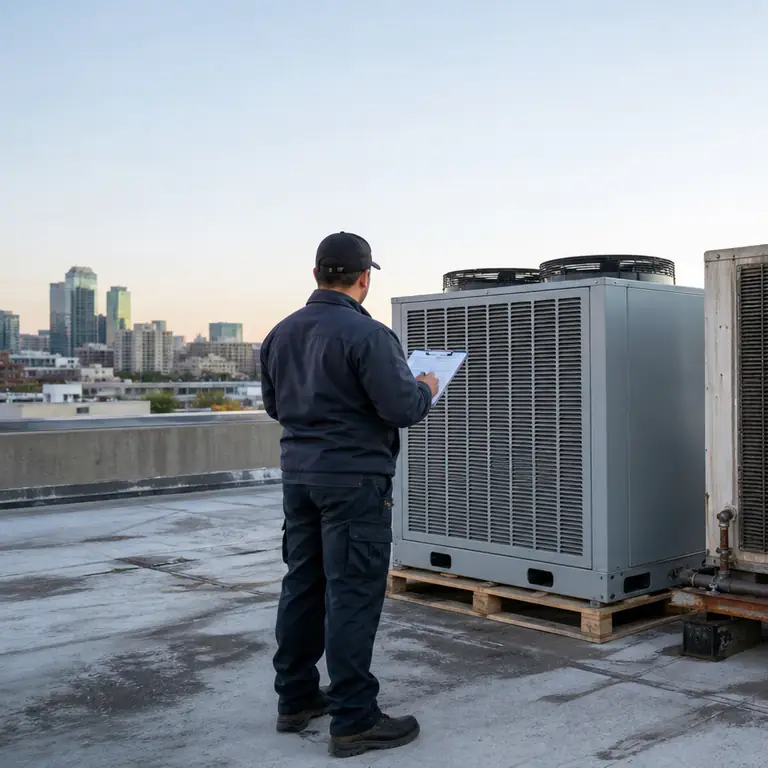
New commercial refrigeration condensing equipment staged for replacement in Fort Worth
Commercial equipmentTemperature-first intakeWritten scope questionsService-area matching

Fort Worth Cold Care structures commercial refrigeration replacement requests so operators can compare a defined repair with a defined system scope. Age alone is not the decision; condition, refrigerant, repeat failures, capacity, controls, downtime, and commissioning all matter.

Last updated: August 26, 2026

What happens on the first visit

A replacement assessment should inventory the existing evaporator, condenser or condensing unit, refrigerant, controls, electrical supply, line set, drainage, space and service clearances, load, operating history, and project constraints.

Repair and replacement scopes must cover the same problem

A compressor-only price cannot be compared directly with a complete system that includes controls, line work, refrigerant, startup, disposal, and warranty. Normalize the inclusions before deciding.

Capacity should reflect the real operation

Door traffic, product pull-down, ambient heat, kitchen load, insulation, operating schedule, and expansion plans affect the replacement selection. Matching only the old nameplate can repeat an old sizing problem.

Downtime belongs in the project plan

Lead time, temporary refrigeration, product movement, access, electrical work, permits or plan review, startup, and staff handoff should be defined before shutdown.

Understanding service charges and estimates

Ask for the call or diagnostic fee, included time, labor structure, service radius, and after-hours policy before dispatch. Published DFW examples retrieved August 26, 2026 include a $59 commercial ice-machine service call with $110 hourly labor, a $194.68 refrigeration call including one diagnostic hour, and a $254.25 emergency after-hours call. Those are other providers’ published entry charges—not quotes for this site or your equipment.

What the service scope can include

  • Existing-system inventory
  • Load and operating-history review
  • Refrigerant and controls assessment
  • Repair-versus-replacement comparison
  • Equipment and access scope
  • Electrical, drainage, and line considerations
  • Downtime and commissioning plan
  • Documented inclusions and exclusions
Compare the decision

Shortcuts versus documented diagnosis

DecisionStaff-only checkRisky shortcutDocumented diagnosis
TemperatureRecord time and readingsKeep resetting equipmentPreserve evidence and test the cause
RefrigerantDo not handleTop off without a leak decisionQualified leak, recovery, and charge procedure
EstimateAsk for entry chargesAccept an undefined verbal totalSeparate call, labor, parts, refrigerant, and follow-up
Four documented steps

From report to verification

01

Triage temperature, product risk, and the operating condition

02

Assess equipment and preserve diagnostic evidence

03

Review and authorize the repair scope

04

Verify operation and retain the service record

Clear answers

Commercial Refrigeration Replacement questions

How old is too old to repair?

There is no universal age cutoff. Condition, refrigerant, repeat failures, efficiency, capacity, corrosion, downtime, and repair depth matter.

Can only the condensing unit be replaced?

Sometimes, if capacity, refrigerant, evaporator, controls, line set, and application are compatible. The match must be designed.

Should replacement use the same capacity?

Not automatically. Confirm the actual load and operating conditions rather than copying an old selection.

What should be included in commissioning?

Controls, safeties, defrost, temperatures, relevant refrigeration readings, operating verification, documentation, and owner handoff.

Can the old system remain as backup?

Only if the design, isolation, controls, condition, and operating plan make that safe and useful.

Commercial Refrigeration Replacement: start with the equipment facts

Send the equipment type, current temperature, business ZIP code, alarm or symptom, and when the problem began.

Call (682) 255-1596 — Commercial refrigeration help